
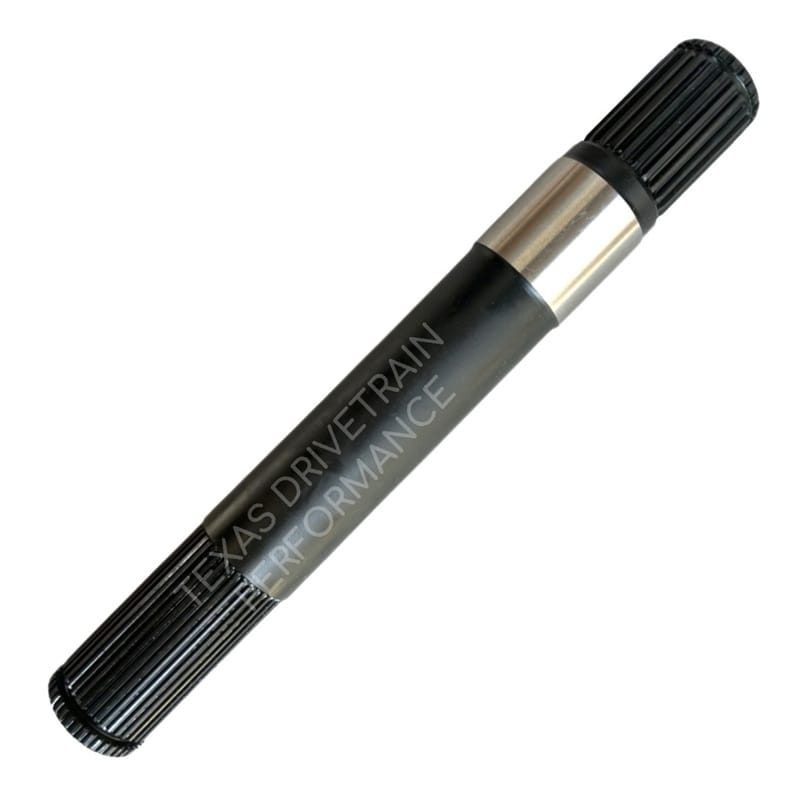
Forged vs. Billet C5/C6 Output Shafts: Why Forged Wins
While “billet” is a popular aftermarket buzzword, a forged shaft is metallurgically stronger and better suited for high-shock drivetrain components like C5 and C6 differential output shafts.
- Continuous Grain Flow: Machining a part from billet bar stock severs the metal’s internal grain lines at critical stress points, such as where the shaft steps down into the splines. Forging compresses the steel under extreme pressure, so the grain flows continuously with the contours of the part, maximizing resistance to torsional shear.
- Superior Heat-Treat Response: Forging eliminates microscopic voids and refines the steel’s internal structure before it enters the furnace. This yields a more consistent heat treatment, higher fracture toughness, and superior shock-load absorption during hard launches.
- Aerospace-Grade 300M & CNC Precision: Unlike billet—which is often used simply to avoid expensive forging tooling—AMP invested in custom forging dies to produce high-volume runs of 300M blanks, the same ultra-high-strength modified chromoly used in aircraft landing gear. Each forged blank is heat-treated to lock in structural integrity, then precision CNC-machined to guarantee exact OEM spline fitment and seal tolerances.


Reviews
There are no reviews yet.